This blog focuses on the applications of a linguistic experiment I conducted that looked at how age stereotypes in society affect the portrayal of young adult characters in YA literature. My theory was that the stereotypes would affect the depictions, and I found out that I was correct, slightly. The portrayal of the characters in YA literature line up more accurately with the stereotypes from the young adult perspective and not the adult perspective.
Monday, December 8, 2014
The Book Thief gives an interesting outlook on the young adult age group. Here, Death is the narrator and his suddenly becomes so focused on a young adult girl named Liesel Meminger. Out of all the people in the world for Death (as powerful as he is) to focus on, he focuses on a teenage girl. Not only is this concept interesting, but the book is based around the actions of Liesel stealing books. From a different perspective, the theft actions of the girl could be described as deviant, but this is not the tone that is shown in the book. The actions of the girl are almost seen as doing something heroic, as if she is going the world a great service by saving all of these books from being burned. This job seems like it would be appropriate for an adult literature expert to take upon themselves, but instead it is a young adult girl who is doing the service. This book is another young adult book that gives off a sense of empowerment for young adult reading it. This sense of empowerment doesn't just come from the fact that Death is so focused on her, or that she is able to pull off such impressive heists, but that she is also living in a dystopic society. It takes a strong character to survive in times of war.
Thursday, December 4, 2014
If I Stay gets its name from the out of body experience and dilemma a girl's conscious is confronting. Mia Hall is the main character within this story. She is experiencing her first relationship with a boy, she is contemplating what she wants to do with the rest of her life, she loves her family, and she gets in a horrible car crash that kills everyone in her immediate family except her. Mia finds herself outside of her body watching everything that occurs after the car accident. The novel is all about Mia's journey to decide whether or not she will decide to stay and live on Earth or to venture into the realm of the afterlife. Most adults would depict young adults as being immature, but Mia does not seem to portray that attribute. First of all, the decision she has to make is one that any immature person would not be able to handle if placed up on them. The manner in which she goes about this decision is by looking at it from all angles. She looks back on her relationships with her friends and her boyfriend, she recounts her memories with her family, and she looks to the future. Overall, Mia is looking at the long-term, big picture aspect of her decision, something that because of the lack of frontal lobe development young adults are suppose to struggle with. The thought process of Mia portrays not an immature conscious, but one that is growing as the story continues along. Young adults see themselves as growing individuals.
Another bestselling novel by John Green is The Fault in Our Stars. This novel is about a girl named Hazel Grace and her experiences living with cancer. Living with cancer is not a life of luxury, it is one of the hardest lives to live--to know that you are dying. This is a concept that a lot of people could not handle very well. However, Hazel is a young adult girl who is handling this situational well. Some of my responses from adults involve the young adults being labeled as hormonal. Hazel is seen within this novel as maintaining more emotional control than her parents, given her particular situation. Like Paper Towns, this book also looks to defy the stereotypes that exist within the young adult society. Augustus Waters, one of the main characters of the story, was once a great basketball player, but because of cancer, he lost one of his legs. He is now no longer considered athletic, but instead of emphasizing his past, a character is actually seen as destroying his basketball trophies; thus, the destruction of his trophies is deemphasizing his athletic career. The book chooses to focus on Augustus's intellect and passion for life; these attributes are easily overlooked in young adult society.
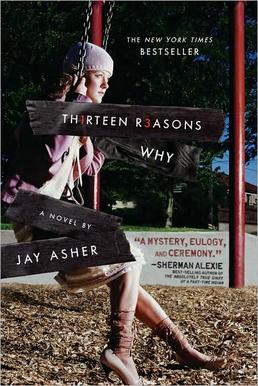
Th1rteen R3asons Why, by Jay Asher, is a suspenseful story about a girl who has left tapes of the story behind her suicide. She left a tape for the thirteen people who were the motives behind her suicide. From the larger society, or from some perspectives of adults, the act of suicide could be labeled as selfish or an act of a hormonal imbalance. Both of the attributes, selfish and hormonal, are responses that I received from my adult responses. Instead, this journey that we as the readers take as we read about Hannah's motive of suicide leads us to realize that young adults have a better idea of what is going on in their lives than we give them credit for. The story Hannah provides us is one of great detail and tragic passion. It is interesting how easily it is to forget what being a young adult felt like; moreover, it is easy to forget how in tune we were in with our emotions and recognized everything that was going on around. Some people may argue against this, but, to them, I would say then why would we need to study young adults in order to teach them. Every generation of young adults will experience things differently. I am sure there are differences between the young adults of the 70s to the young adults of the present. And, because a difference exists, the books of choice were different as well. This book defies the age stereotypes from the adult perspective by not depicting the suicide with a selfish tone, but one reflecting how easy it is to feel unaccepted and alone in society--something young adults may be experiencing.
Paper Towns is a bestselling novel by John Green. It is about a boy named Quentin Jacobsen who follows a mysterious path of clues and hints to track down his neighbor, Margo Roth Spiegelman. Margo is a girl that is super adventurous, and lives a seemingly exciting life. The night before she leaves, Quentin and Margo take it upon themselves to embark on a midnight adventure to go out and pull pranks. From the adult perspective, these YA characters would be seen as being reckless/rebellious--which was one of the data responses received from my surveys. But, from the young adult perspective, these characters would be seen as being wild/crazy--which definitely has more of a YA tone do it. Now, if the midnight adventures would have been described by an adult, the tone and feel of the adventures overall would be entirely different. This would have not had the same effect for the young adult readers going on this adventure with them. It would almost sound like a lecture to them instead of a fun-filled night. Another conclusion that I came to find form my data was that some YA literature looks to defy or stretch stereotypes young adults have for themselves. For example, the main characters of the story are not ones that would be labeled as an athletic bunch. This is interesting because the biggest response received from the young adult was "athletic." I have concluded that YA literature not only looks to draw the readers in with relatable characters, but it also looks to break down the stereotypes such as jocks being the only fun or "cool" people in the school. By the end of the novel, the nonathletic people are the ones taking over the school and throwing the parties. This depiction emphasizes that just because you're not athletic doesn't mean you don't have positive qualities about you.
This book is not an installment of the Divergent series, but it is a prequel from the perspective of the character Tobias. This book is written by the New York Times bestselling author, Veronica Roth. The setting of this story takes places in a dystopic society. How this book relates to the theory is pulled from the main character Tobias. He is a relatable character to young adults not only because of his age, but because he represents a sense of youtful independence. This kind of independence is one that young adults see themselves as holding within them. From the age responses, none of the adults labeled young adults at "independent." However, some of the young adult responses did. In the story, Tobias is seen breaking away from his former life to create his own. This type of action reflects independence. He was beginning to live on his own and take care of himself. Also, Tobias is depicted as a very strong character, and those young adults who can relate to him would feel empowered by the similarities they hold with him. This case is especially true when Tobias is seen surviving and succeeding in the dystopic society.
Subscribe to:
Posts (Atom)